
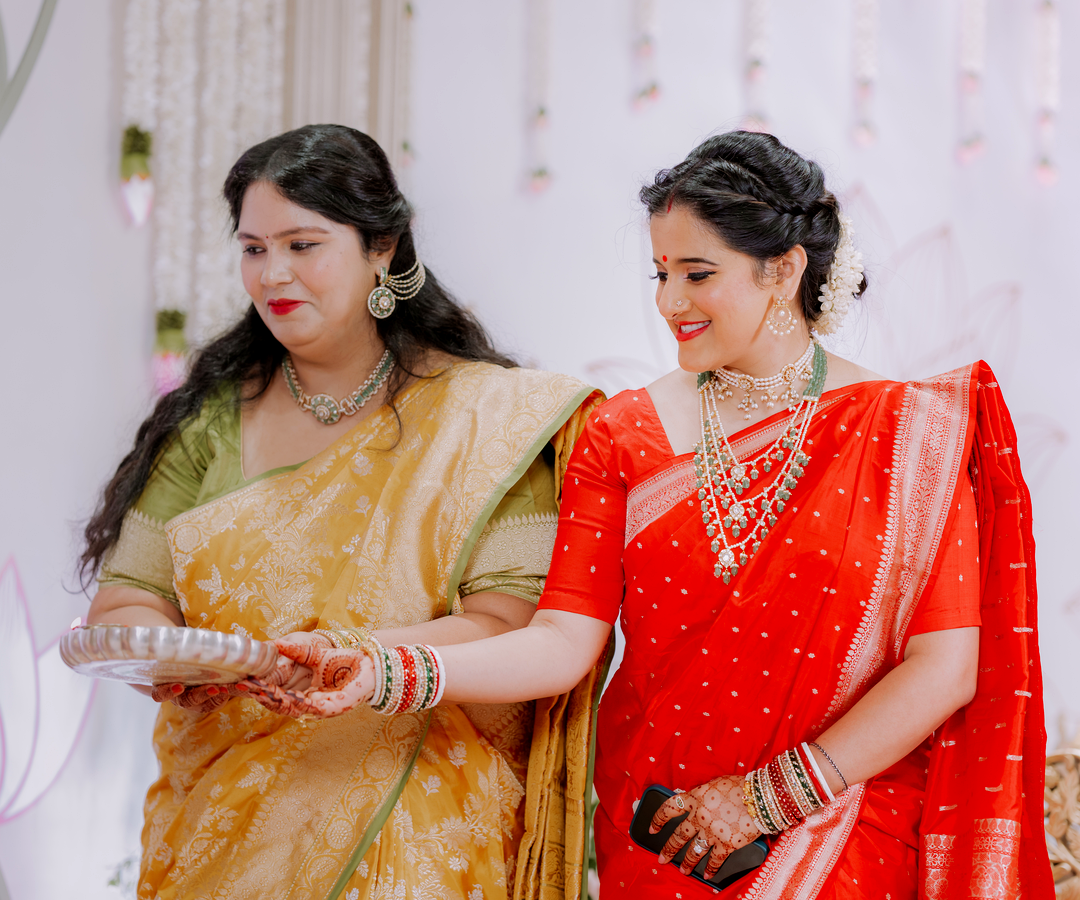

A Telugu wedding is less a single event than a sequence of blessings — each ritual a small promise made in front of fire, family and the gods. You do not need to know Sanskrit to feel them; you only need to know what is happening.
Before the wedding day
In the days before the ceremony, both families hold smaller rituals at home. Nischitartham, the formal engagement, fixes the match and the date. Pendlikoothuru and Pendlikoduku bless the bride and groom with turmeric, oil and new clothes. Snatakam and Kashi Yatra — a playful mock-pilgrimage where the groom “sets off” for Kashi and is gently called back — bring warmth and laughter before the solemn day.
Setting the muhurtham
The muhurtham is the auspicious window for the central rites, chosen with the family priest from the couple’s birth stars and the Telugu calendar. Many Telugu weddings fall in the early morning, sometimes before sunrise — which shapes every other decision, from vendor load-in to when breakfast is served. Treat the muhurtham as the fixed point your whole day is built around.
Arrival & welcome
The groom’s family is received with Mangala Snanam (an auspicious bath) and Aarti. Ganesh and Gauri are worshipped first, as is custom, to begin without obstacles. The bride is often carried in seated in a bamboo basket by her maternal uncles, and a curtain (the Antarpat) is held between the couple until the moment they are to see one another.
Kanyadanam & Jeelakarra Bellam
In Kanyadanam, the bride’s parents give her hand to the groom — among the most emotional moments of the day. Then comes the ritual most associated with Telugu weddings: Jeelakarra Bellam. At the priest’s cue, the couple place a paste of cumin (jeelakarra) and jaggery (bellam) on each other’s heads. The bitter-and-sweet mix is said to bind them inseparably — like the two, they are meant to hold together through every taste of life.
Mangalsutra Dharana & Talambralu
The groom ties the Mangalsutra — two golden discs on a turmeric-dyed thread — around the bride’s neck with three knots, as conch and drums (the baajaa) rise to drown out any inauspicious sound. Then the mood lifts entirely: in Talambralu, the couple joyfully shower each other with pearls, rice and turmeric. It is loud, it is competitive, and it is the day’s most photographed laughter.
Saptapadi & blessings
For Saptapadi, the couple take seven steps together around the sacred fire, each step a vow — for nourishment, strength, prosperity, happiness, family, the seasons, and lifelong friendship. With the seventh step, the marriage is complete. Elders then offer Akshintalu (blessed rice), and the couple are shown the star Arundhati as a symbol of devotion before the Grihapravesam welcomes the bride into her new home.
Ceremony at a glance
A simplified running order. Times are illustrative — your priest sets the true sequence around the muhurtham.
Questions families ask
The core muhurtham rituals usually run two to three hours, but the full morning — arrival, pujas, ceremony and blessings — often spans four to five. Pre-wedding events add their own time on earlier days.